Your patients are getting the medication.

Are they getting the support?

The WHO's 2025 guidelines are clear - GLP-1 medication works best alongside structured psychological support.

Most services know this, but as yet very few have a credible, evidence-based way to deliver it.

We do.

The gap between prescription and psychological care is widening.

GLP-1 medications have transformed the weight management landscape, but the evidence is clear that medication alone is not enough.

The WHO's 2025 guideline recommends intensive behavioural therapy as a co-intervention for every adult prescribed GLP-1 treatment. JAMA, NICE, and the NHS Healthier You service specification say the same thing.

Most clinical leads already know this gap exists. The challenge is having a structured, trained, and evaluated pathway that can be delivered at scale, within existing teams, without requiring a new hire or a multi-year build.

That is what Eating Freely provides.

65.7%

of people in weight management services report frequent emotional eating.
 
“My fiancé was killed in a car accident three weeks before
our wedding… I coped by eating to block out the pain.”

35%

Only 35.42% of professionals felt adequately trained to support people with obesity.
 
“We aren’t trained in weight management in any meaningful way - it’s mostly trial and error.”


20%

of staff have no confidence at all to support patients.

“I don’t feel confident managing obesity. I end up falling
back on generic advice that I know isn’t helpful.”

Stats from ICB Yorkshire commissioned report - More Than Weight (2025)

Built for the organisations leading the next generation of weight management care.

Whether you run a private weight management clinic, a workplace wellness programme
or you are thinking about how to future-proof your GLP-1 treatment protocols, the conversation starts in the same place.

Private Weight Management & T2 Diabetes Services

Clinical standards now require psychological support as part of any responsible programme - it is no longer acceptable to claim it is 'out of scope'. We give your team the training, the patient programme, the tools to deliver it and the framework to evaluate your ROI.

EAP & Workplace Wellness Providers

Emotional eating, weight concerns, and disordered eating behaviours are among the most underserved areas in workplace mental health. Our programme gives providers a structured, evidence-based pathway that supports employees who are struggling - including those who are taking GLP-1 medication.

Health Insurers & Forward-Thinking Payers

The most progressive insurers are already asking how to make GLP-1 coverage more clinically responsible. Pairing medication approval with access to a structured psychological programme is the logical next step - and the evidence for long-term outcome improvement is there. We can help you build that pathway.

How prepared is your organisation for the psychological demands of GLP-1 care?

This is a 10-minute audit benchmarked against the most up to date guidelines from the WHO, NICE, and now contained within the NHS Healthier You service specification. It gives you an honest picture of where your programme stands and where the most meaningful improvements can be made. It's a clear, expert-level read of your current position.

What Partners Say

Organisation-Wide Impact - Evergreen Active CIC, Wakefield

Evergreen Active CIC delivers NHS-aligned health and wellbeing programmes across Wakefield, funded by Wakefield Council and public health partners.
When they integrated the Eating Freely training and programme into their organisation, the impact extended far beyond the intervention they had planned - transforming how every team member works, across every client group they serve.

1
Service Transformation


The Eating Freely framework did not stay within one programme. Its tools, reflective questions and behaviour-change principles naturally informed conversations across every Evergreen Active service - from inclusive walking and running groups to movement-to-music sessions, family wellbeing programmes, GenX menopause classes, Work It Out mental health programmes for men, Reclaim & Reset emotional eating work, and even a young people's anger management programme.

One investment in training created organisation-wide capability across every programme serving young people and adults, male and female.

2
Client Experience


Clients who had never disclosed eating difficulties, and critically would not have sought help through any other service, began to share long-held struggles once safe, compassionate conversations were opened.

Weight concerns, low confidence, menopause challenges and repeated 'diet failures' were reframed as coping responses rather than personal failings. Clients reported making better choices 'without even realising it.' This was particularly true for men - a group who would rarely seek support through any other door - who began to open up about eating behaviours they had never previously disclosed.


3
Practitioner Skills


The programme deepened how the whole team now understands eating behaviour. It was never a willpower issue, it is rooted in coping, conditioning and nervous system responses.

This strengthened trauma-informed practice across the board, and gave staff the confidence to have conversations previously considered 'out of scope.' As Paula noted: 'the Eating Freely model and tools makes those conversations so much easier to have.'

The team report having conversations daily with their members - on a walk or run, as part of a discussion group, and in 1:1 consultations.

4
Outcomes & Value


Evergreen Active identified a clear unmet need that existing services were not reaching. By addressing root causes rather than managing symptoms, the approach delivers what commissioners increasingly require - preventative, person-centred support that reduces reliance on expensive pharmaceutical interventions.

The initial cost for any organisation, in Paula's words, 'would recoup itself thousands of times over.' Compared with the cost and attrition risk of hiring a psychologist or other mental health professional to design, test and deliver a new programme, partnering with Eating Freely was an obvious long term solution for Evergreen Active as a CIC.
"The Eating Freely approach has not only enabled us to offer specialist support where there is a clear unmet need — it has improved the quality, depth and compassion of support across all our programmes.
We firmly believe this to be preventative, person-centred support that sustainably addresses root causes, rather than repeatedly managing symptoms."

Paula Appleton, Director

Evergreen Active CIC · Wakefield, UK · NHS public health partner
"Eating Freely gave me the skills, knowledge and confidence to approach conversations differently - particularly with men in our programmes - creating space for empathy, curiosity and understanding, rather than repeating the same messages about diet, willpower and calories. It has changed how we think across the whole organisation."

Andy Freeman, Director

Evergreen Active CIC · Wakefield, UK · NHS public health partner

The Research

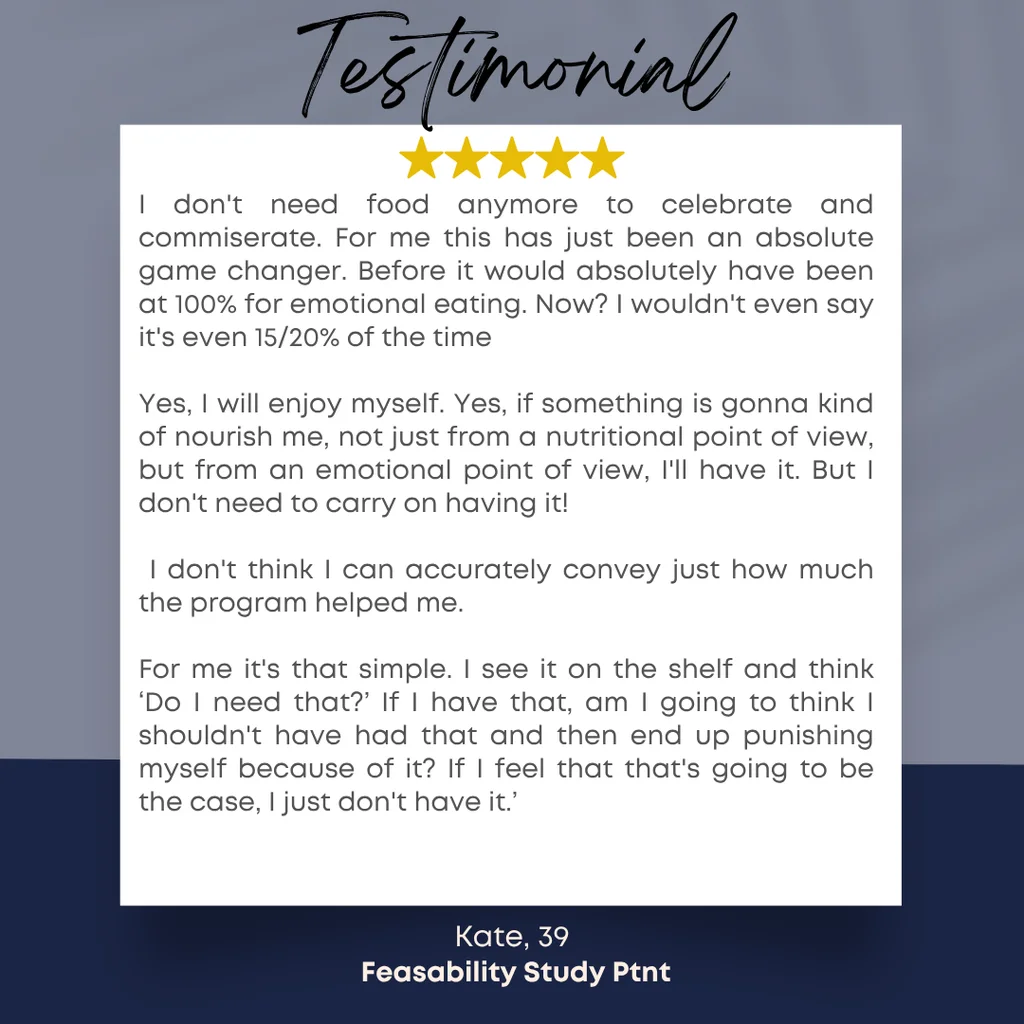
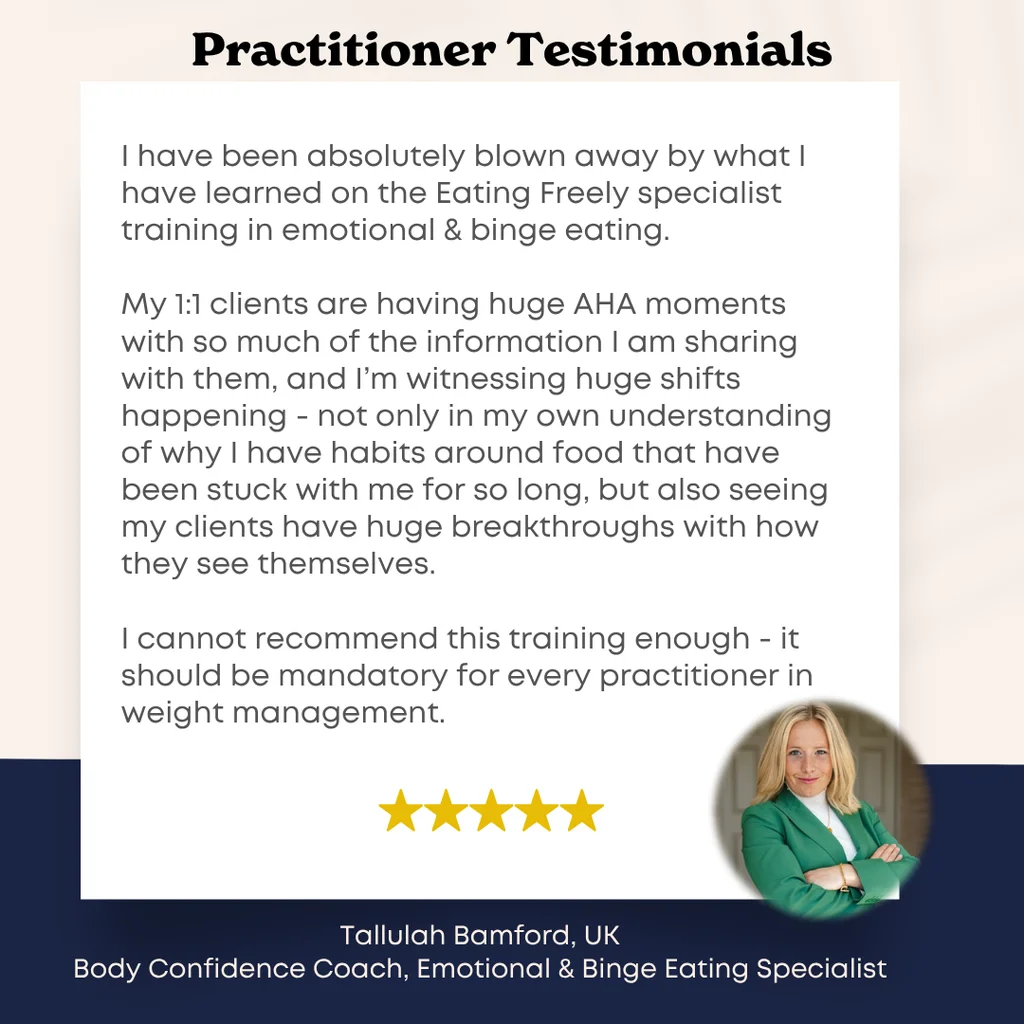
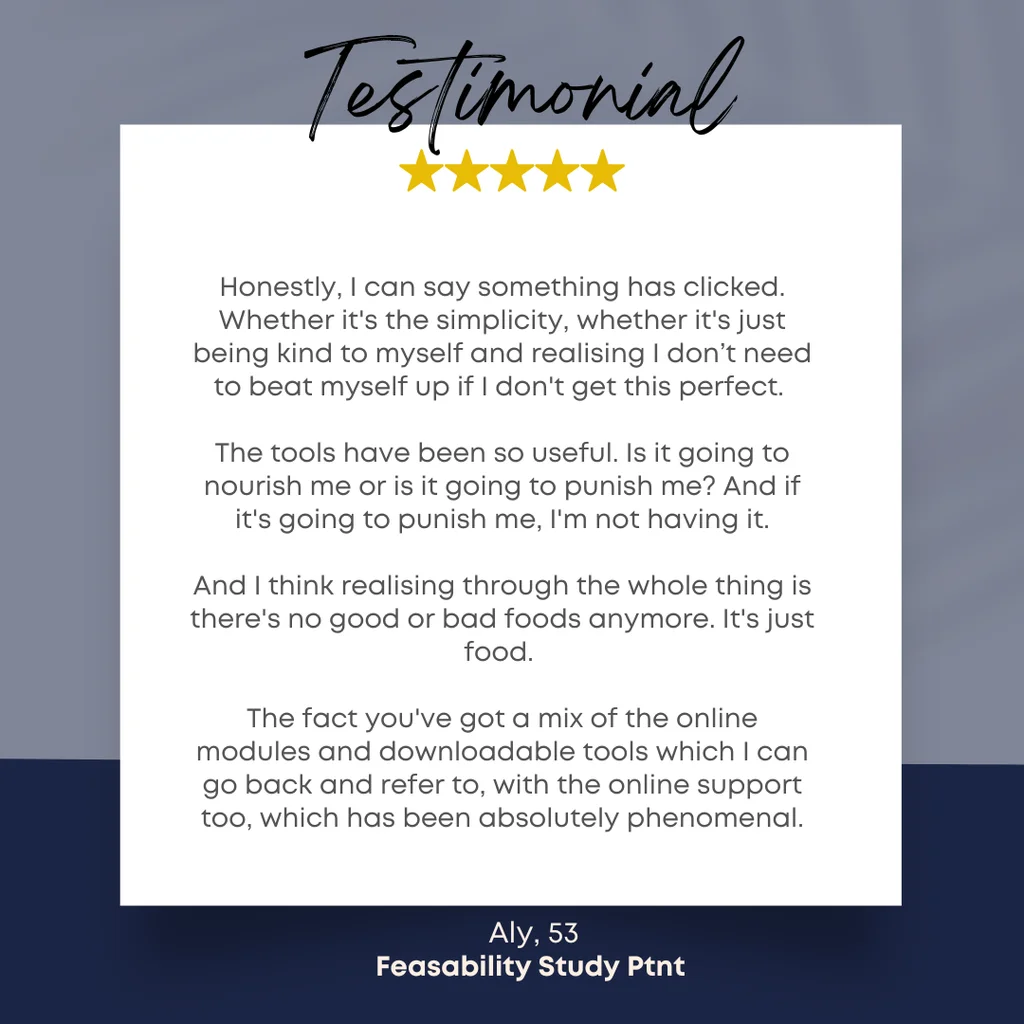
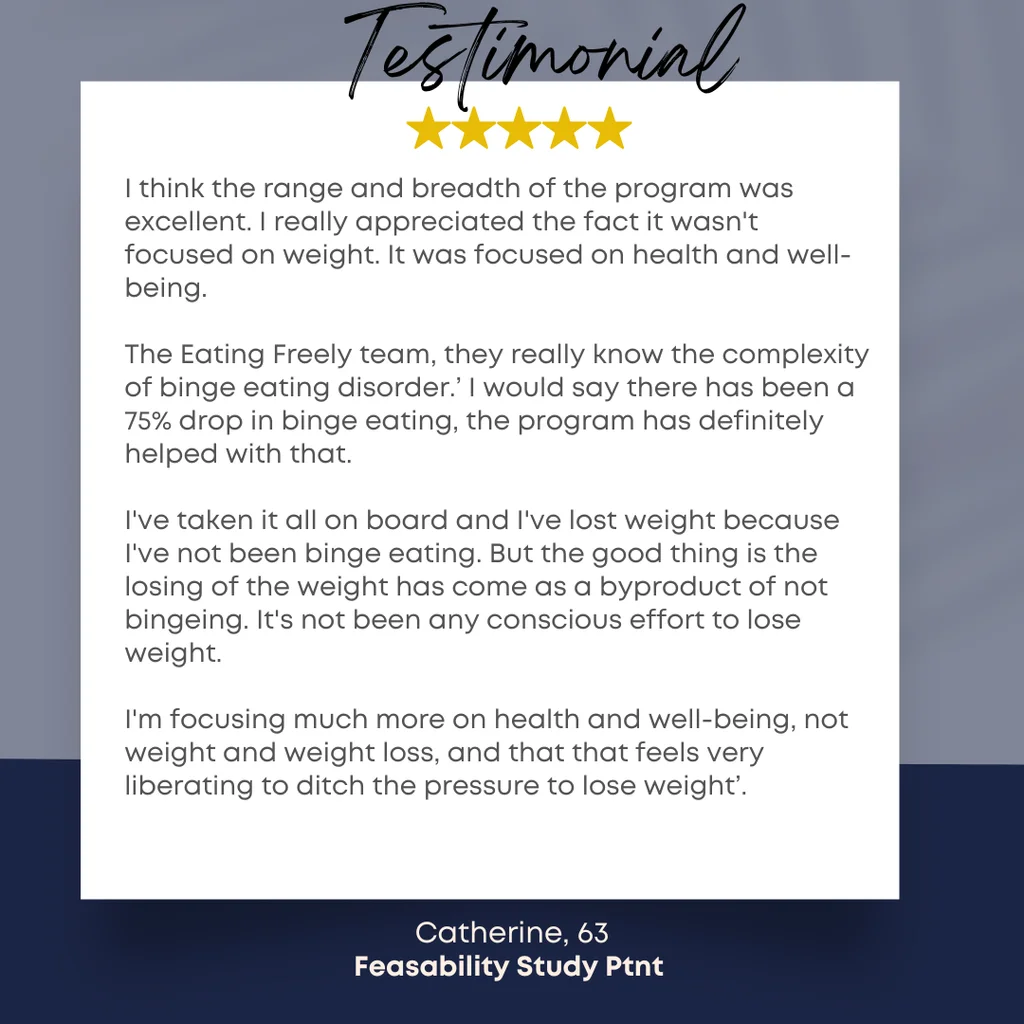
The evidence base for our programme is grounded in a systematic review of 47 studies. Our programme has been independently evaluated by Leeds Beckett University. The outcomes speak for themselves.

Leeds Beckett University — Independent Pilot Study

Measurable outcomes in emotional eating, weight, and wellbeing

An independent feasibility study evaluated the Eating Freely programme with adults living with obesity and emotional eating, combining validated quantitative measures with in-depth qualitative interviews.

The Eating Freely group programme was run over 5 months, co-facilitated by Dawn Power, PhD candidate from Leeds Beckett University who first took the full Eating Freely training to specialise in emotional / binge eating, and Victoria Webster, Clinical Psychologist and Licensed Eating Freely Practitioner.

27.7%

reduction in emotional eating scores (TFEQ validated scale)

75-100%

reduction in emotional/binge eating reported by participants 

4.2Kg

average weight loss as a natural byproduct, with no weight focus

Systematic Review — Journal of Human Nutrition and Dietetics (2025)

The Leeds Beckett systematic review analysed 47 studies with nearly 7,000 participants to identify which behaviour change techniques produce the strongest outcomes. The top five are integrated into every Eating Freely programme.

The Eating Freely Programme is further underpinned with trauma informed practice.

47

peer-reviewed studies analysed

6900+

participants across the review

5

gold standard behaviour change techniques identified, all included in our programme.

"I'd like to see obesity or disordered eating given the same gravity as bulimia or anorexia. I know what's good to eat and what's not good. The problem is in my head."
PPIE Participant — Obesity UK

The Solution

Eating Freely is the only full solution that combines approved practitioner training and a proven patient programme.

Eating Freely is a structured, time-limited programme for adults with emotional eating and binge eating disorder, combined with internationally CPD-approved team training that allows your own clinicians to deliver it. The programme was developed over 16 years of practical application, combining the experience of both clients and health professionals. Eating Freely training internationally approved as an advanced CPD training - including the NBHWC in the USA and HCANZA in Australia/New Zeland.

You do not need to hire a specialist. You do not need to build something from scratch. Your existing team can deliver trauma informed support within your existing service from the point of completing the training.

The Programme

A structured, evidence-based programme for adults with emotional eating and binge eating disorder. Delivered 1:1 or in groups, in person or online, with a full suite of client-facing digital tools, worksheets and resources. White-label and custom branding available.

The programme was developed over 16 years of clinical practice, has been independently evaluated by Leeds Beckett University and is grounded in a systematic review of 47 studies across behaviour change, trauma-informed care and eating psychology.

The Training

Internationally CPD-approved training that equips your team to assess, support and deliver the programme within your service. Approved by the National Board for Health and Wellness Coaching (NBHWC) and recognised across the UK, US, Ireland and Australia.

All training combines live facilitated sessions with additional self-paced learning. Your team leaves with the knowledge, the tools and the clinical confidence to have conversations they may previously have referred out.

Why This Matters for Your Organisation

Bringing in a specialist eating disorder psychologist costs upwards of £70,000–£90,000 per year in salary alone, and when they leave, their expertise leaves with them.

Building a programme from the ground up requires time, resource and clinical validation that most services simply do not have.

Referring clients out creates gaps, breaks continuity of care and produces outcomes you cannot measure or own.
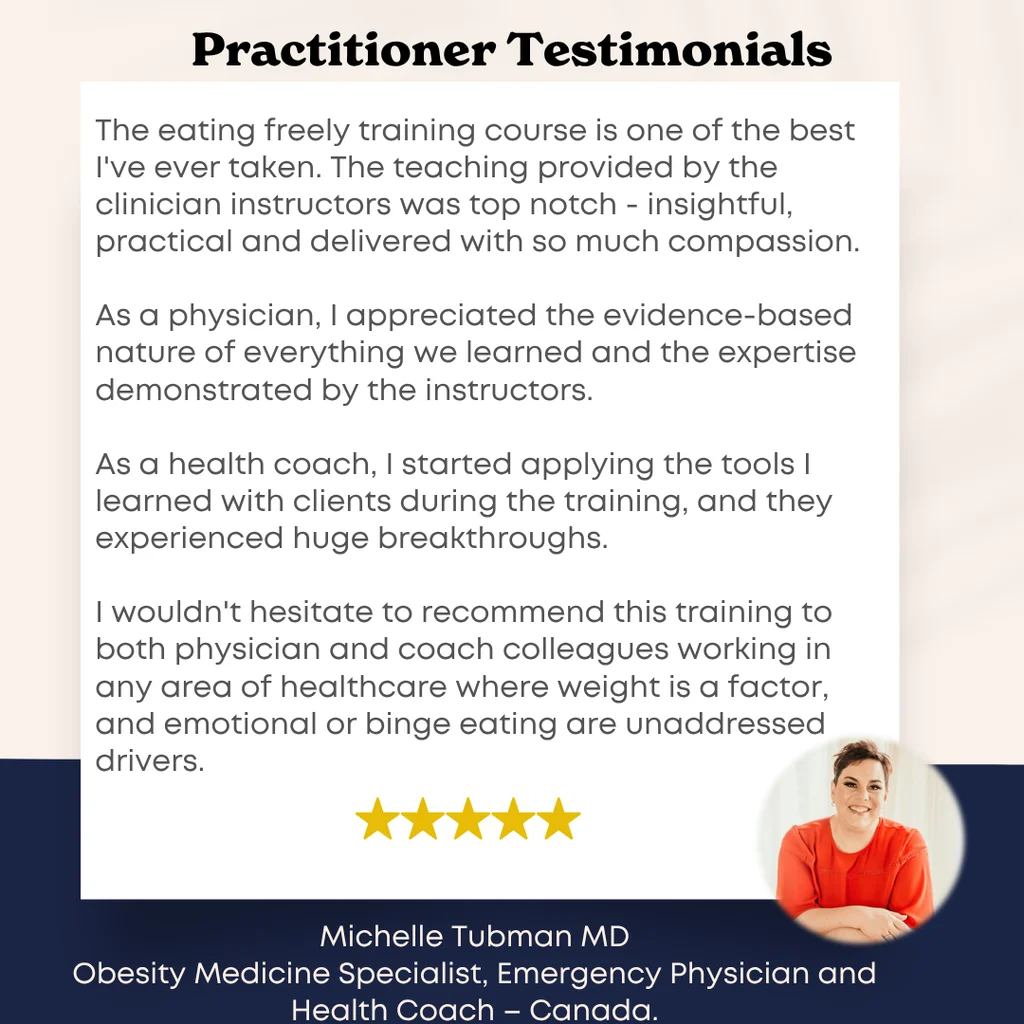
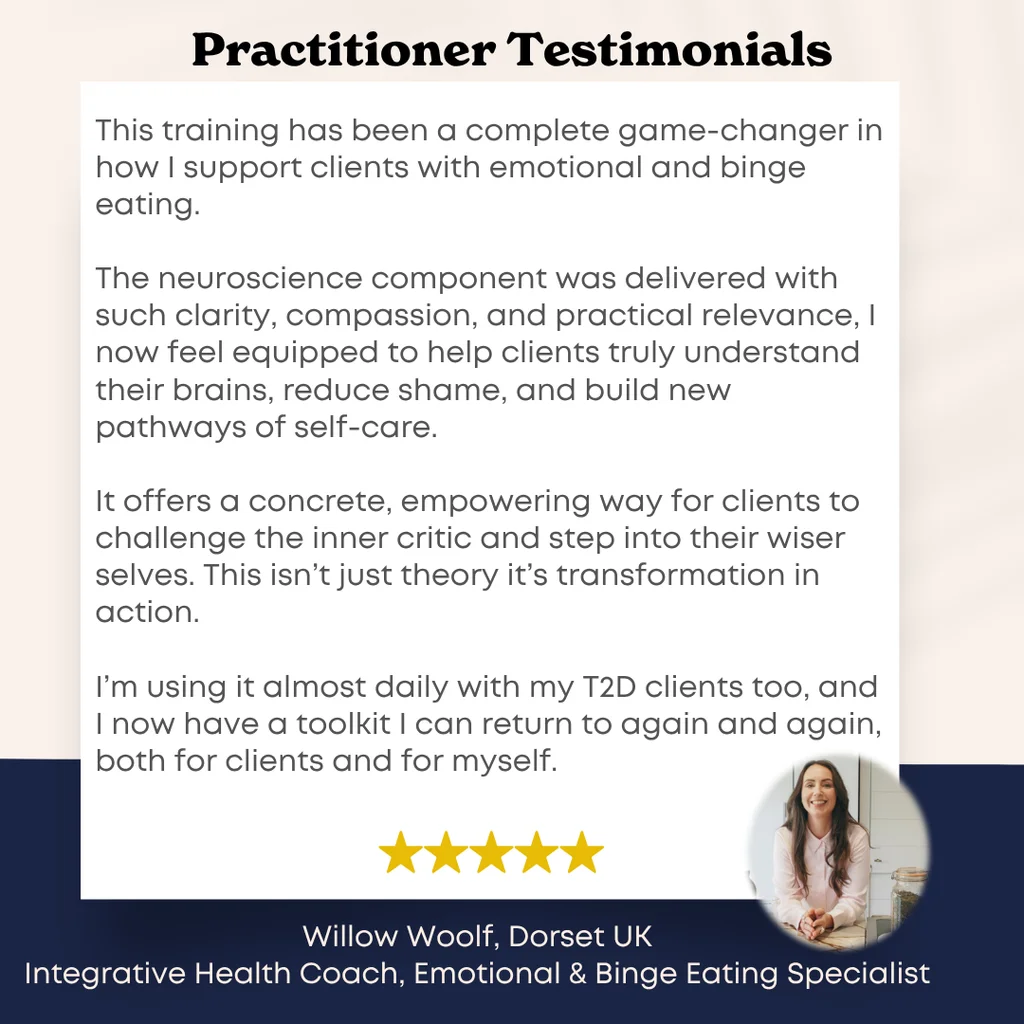
The Eating Freely framework solves all three problems at a fraction of the cost, with a validated programme already in use across the UK, US, Ireland, Australia, New Zealand and South Africa.  

Partnership Options 

Find the right starting point for your organisation.

Every partnership begins with a conversation. These tiers are a clear way to consider what your service needs now - from team training through to full programme implementation and strategic licensing.

TIER 1

Team Training

For services that want their team trained and equipped to have better conversations with patients around eating behaviour, weight, and GLP-1 support.
  • 1-day facilitated online or in-person training
  • 6 self-paced digital training sessions
  • 6-week online support forum for team Q&A
  • Patient resources — worksheets and handouts
  • 12 CPD points per team participant

TIER 2 MOST POPULAR

Programme Implementation

Team training plus structured rollout of the Eating Freely patient programme, with live supervision calls and comprehensive patient resources.
  • 2-day facilitated training (online or in-person)
  • 12 self-paced digital training sessions
  • 6 live supervision calls for programme rollout
  • Ongoing online teamsupport forum
  • Full patient programme — worksheets, handouts and videos

TIER 3 

Strategic Partnership

For organisations seeking deep integration including white-labelling, programme evaluation, and ongoing clinical supervision at scale.
  • Comprehensive team training
  • Monthly team group supervision
  • Monthly group supervision sessions online
  • White-label patient programme
  • Programme and service evaluation — Year 1

For service leads, commissioners, and clinical teams.

In 2025, WHO published its first clinical guideline on the use of GLP-1 therapies for the treatment of obesity in adults. Its position is clear: obesity is a chronic, complex, relapsing disease requiring lifelong care, and GLP-1 medication is one component of a multimodal chronic care model. The guideline explicitly recommends that people living with obesity receive behavioural and lifestyle counselling as a minimum standard of care, and that intensive behavioural therapy (IBT) should be provided as a co-intervention alongside GLP-1 medications within a comprehensive clinical algorithm.

The WHO defines IBT as structured, psychologically informed support including goal-setting, counselling, and periodic assessment of goal attainment. Delivering it properly requires trained practitioners and a coherent clinical framework. The 2025 WHO guideline identifies comprehensive training of health workers as a core implementation requirement, placing it alongside governance, monitoring, and referral systems as a structural necessity.

NICE guidelines for weight management similarly emphasise behavioural intervention alongside dietary and physical activity support, with psychological factors recognised as central to long-term outcomes. For patients meeting criteria for Binge Eating Disorder, NICE recommends psychological therapy, typically CBT, as the primary treatment.

The evidence base on what works is substantial. A 2025 systematic review and meta-analysis published in the Journal of Human Nutrition and Dietetics, drawing on 47 studies and nearly 7,000 participants, identified the specific behaviour change techniques most effective for emotional eating (Power et al., 2025).

The five associated with the greatest impact on both emotional eating and weight were: incompatible beliefs, goal setting (outcome), reviewing outcome goals, feedback on behaviour, and pros and cons. These are associated with reductions in emotional eating scores of between 0.99 and 1.46 standardised mean difference, which is considered a large clinical effect, and average weight reductions of between 5.4kg and 8.4kg as a natural byproduct of addressing the psychological drivers rather than targeting weight directly.

All five techniques centre on identity, values, and self-regulation. They require skilled, structured facilitation by practitioners with genuine competence in the psychology of eating behaviour.

The Eating Freely programme was built around these evidence-identified techniques, integrating CBT, Acceptance and Commitment Therapy, mindfulness, self-compassion, nutritional rehabilitation, and neuroscience-informed psychoeducation within a trauma-informed, weight-inclusive framework, before WHO guidelines for weight management services and GLP-1 pathways were ever published.

Most services currently do not screen at all, and the clinical consequences are significant.

Research shows that up to 58% of adults referred to weight management services report struggling with emotional eating (Wong et al., 2020).

The More Than Weight Report (2025) published by West Yorkshire ICB found that 66% of service users report frequent emotional eating, 78% have a co-existing mental health or neurodevelopmental condition, and 0% are routinely screened for eating disorders before treatment begins.

The Power et al. systematic review concluded explicitly that weight management services should screen patients for emotional eating in order to tailor interventions to individual needs.
Screening serves two clinical functions. It identifies patients at risk of harm from inadequately supported interventions, and it enables personalisation of care, which the evidence shows materially improves outcomes.

Two validated tools are particularly relevant for this population.
The Three Factor Eating Questionnaire (TFEQ-R21) measures emotional eating, uncontrolled eating, and cognitive restraint. It is well-validated, widely used in research and clinical settings, and provides a clear baseline against which change can be tracked over time. It is the primary outcome measure used in the Eating Freely feasibility pilot and the tool we recommend for outcome monitoring in weight management services.

The BEDS-7 (Binge Eating Disorder Screener-7) is a brief, freely available self-report measure that can be administered as part of an initial assessment without specialist training. It provides a clear indication of which patients are likely to meet diagnostic criteria for Binge Eating Disorder and therefore require a more specialist pathway or referral.

The Eating Freely team training equips practitioners with the clinical knowledge to interpret screening results, respond within their scope of practice, and refer appropriately for patients requiring specialist input.

Yes, and the gap between what guidelines recommend and what most services deliver is now well documented.

The 2025 WHO guideline makes two directly relevant statements. A good practice statement confirms that people living with obesity should receive context-appropriate behavioural counselling as a minimum standard of care, and that for individuals prescribed GLP-1 medications, this should be a first step toward intensive behavioural therapy. A conditional recommendation confirms that intensive behavioural therapy may be provided as a co-intervention within a comprehensive multimodal clinical algorithm for patients on GLP-1 medications.

NICE guidance on weight management similarly identifies behavioural and psychological support as integral to effective care, with specific recommendations for patients presenting with disordered eating patterns.

The evidence underpinning these recommendations is robust. The Power et al. meta-analysis found that psychological interventions targeting emotional eating produced a standardised mean difference in emotional eating scores of -0.99 across 42 studies and nearly 7,000 participants, a large clinical effect. Average weight loss of 4.09kg was observed as a byproduct across 32 studies, without dietary restriction as the primary focus. The review also found that the specific nature of the behaviour change techniques used matters more than the quantity, pointing toward the need for specifically designed, evidence-informed programmes.

The Eating Freely feasibility pilot found a 27.7% reduction in emotional eating scores from baseline to follow-up using the Three Factor Eating Questionnaire, with improvements continuing beyond the end of the programme. Average weight loss was 4.2kg, achieved without any weight loss focus in the programme. Programme attendance averaged 13.75 out of 16 sessions.

The Eating Freely framework gives services the training, tools, and patient programme needed to meet both NICE and WHO guidance, with independent validation and CE/CPD approval already in place.

GLP-1 medications are effective at reducing appetite and supporting significant short to medium term weight loss. The clinical trial evidence summarised in the 2025 WHO guideline shows average weight reductions of between 5% and 16% during treatment.

The medication does not address the psychological relationship a person has with food, their body, or themselves, and the clinical consequences of that gap are becoming increasingly visible in practice.

The WHO guideline acknowledges limited data around discontinuation of GLP-1 medications, noting that available evidence is insufficient to inform clear clinical guidance. What services are beginning to observe aligns with what clinicians working in disordered eating have understood for years: patients who have not addressed the psychological drivers of their eating behaviour are at significant risk of weight regain when appetite suppression is reduced, sometimes returning to patterns more entrenched than those they presented with at the start.

The specific psychological challenges that require structured support in GLP-1 care include identity shift and adjustment to a changing body; persistent food noise that medication may reduce but rarely eliminates; grief when medication stops producing expected results; body image adjustment; and the risk of disordered eating patterns worsening when pharmacological effect is removed.

For patients with pre-existing emotional eating or binge eating disorder, these risks are compounded. The Power et al. systematic review found that emotional eating is associated with emotional regulation difficulties, trauma histories, and addictive behaviours, with shared psychological mechanisms between disordered eating and substance misuse. These are not characteristics addressable through dietary advice or activity coaching.

The WHO guideline states that effective obesity care must address the full spectrum of health, social, and psychological impacts of the condition across the life course, embedded in multimodal clinical algorithms that integrate behaviour change support, pharmacotherapy, long-term follow-up, and supportive environments.

The Eating Freely programme gives patients the psychological tools to understand their relationship with food, build lasting coping strategies, and sustain behavioural change beyond the period of medication use.

The WHO guideline on GLP-1 therapies identifies comprehensive training of health workers as a core implementation requirement for chronic obesity care, placing it alongside governance, monitoring, and referral systems as a structural necessity.

The Power et al. systematic review found that effective emotional eating interventions use specific behaviour change techniques centred on identity, self-regulation, and psychological flexibility. Delivering these safely and effectively requires working clinical knowledge of the psychological drivers of eating behaviour, a trauma-informed approach to patient interaction, specific tools usable within a practitioner's existing scope of practice, and ongoing support during implementation.

The Eating Freely practitioner training provides this. It consists of a one-day intensive foundation session, followed by six weeks of self-paced learning via our online portal and practitioner community, with ongoing supervision and clinical troubleshooting support throughout implementation. The training is CE/CPD approved across the UK, USA, Australia, and South Africa.

Training is accompanied by the full Eating Freely patient programme: a structured, digitally-delivered programme giving practitioners a validated clinical framework and patient-facing resources from day one. For organisations wanting to embed this at scale, the programme can be licensed and white-labelled, delivered under the service's own brand and integrated into existing care pathways.

The Eating Freely practitioner network is available as a referral resource for complex cases requiring specialist input.

Most organisations can be operational within 12 weeks of signing a partnership agreement. This includes a full onboarding programme, practitioner training, clinical resources, and ongoing supervision support as the patient programme is rolled out. We work around your team's schedule.

Our training is designed specifically for health professionals without a therapy background. For complex presentations including Binge Eating Disorder, our full specialist training is suitable for an experienced practitioner with some grounding in psychology or therapy. These complex patients can also be referred to trained specialists within our network.

Yes. Our Strategic Partnership tier includes white-label options, allowing you to deliver the programme under your own service brand. We can also co-develop bespoke care pathways that integrate with your existing clinical framework. Contact us to discuss your specific requirements.

We offer three partnership tiers at different investment levels to suit services of varying size and need. Pricing is provided following a zoom call, where we can assess your specific requirements and recommend the most appropriate tier. Book a call to receive a tailored proposal.

Yes. The programme is designed to align with NICE guidelines and WHO recommendations, making it suitable for NHS Tier 2 and Tier 3 weight management services, primary care networks, and integrated care boards. Applications are now open for our NHS multi-site pilot and service evaluation, learn more and submit an Expression of Interest here: https://eatingfreelyinstitute.com/nhs/

The conversation starts wherever you are right now.

If you already know you have a gap and you want to talk about how to close it, book a call. If you want an objective, evidence-based picture of where your service stands before you do anything else, start with the audit. Either way, we are here.

Copyright 2026 Eating Freely Ltd. - All Rights Reserved

Are you: